1885-1915 Colonial Accent Table


Reasonable Offers considered
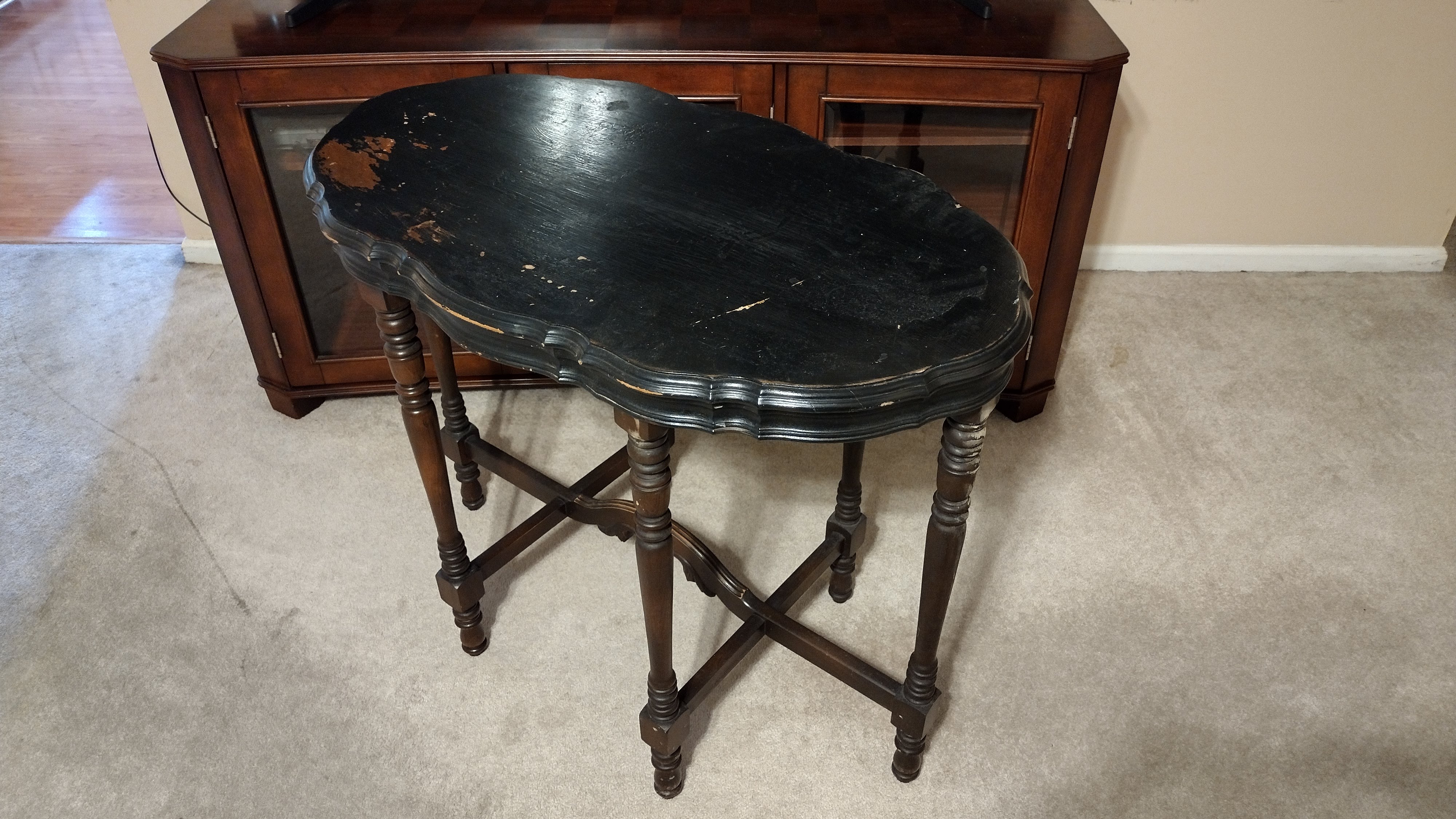
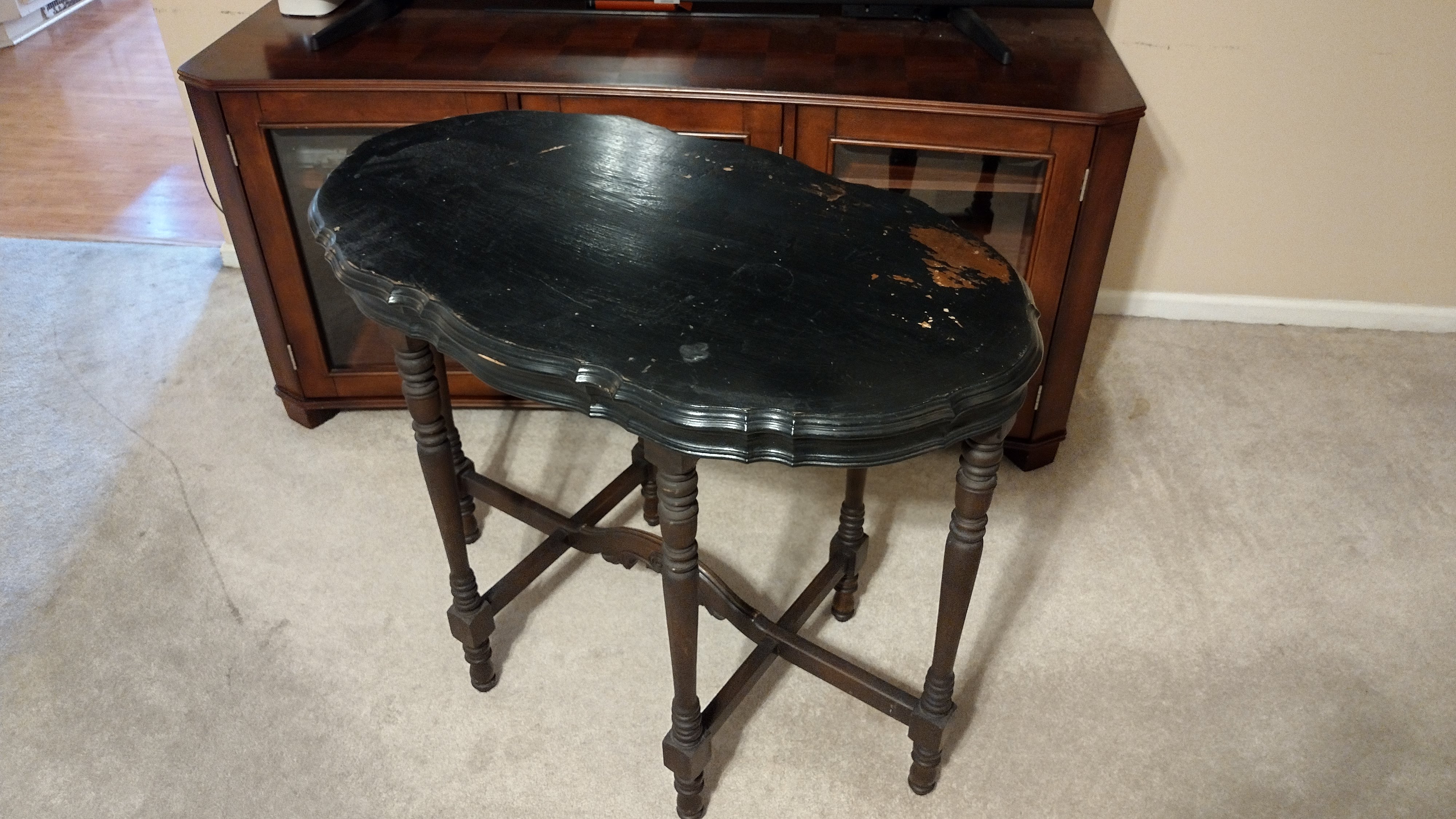
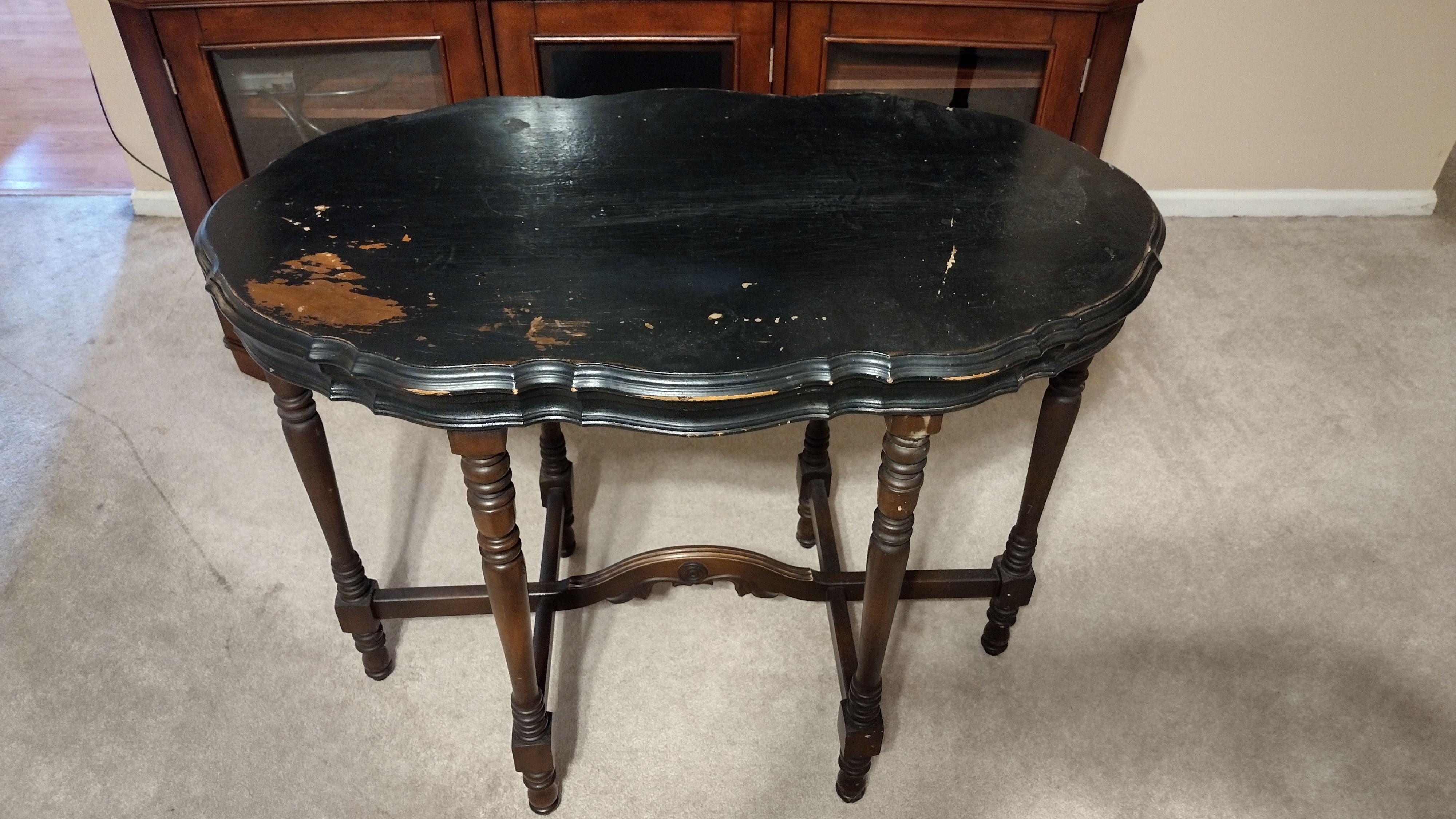
Wooden accent / parlor table / tea table with a scalloped, serpentine oval top and spindle or turned legs connected by a cross-stretcher
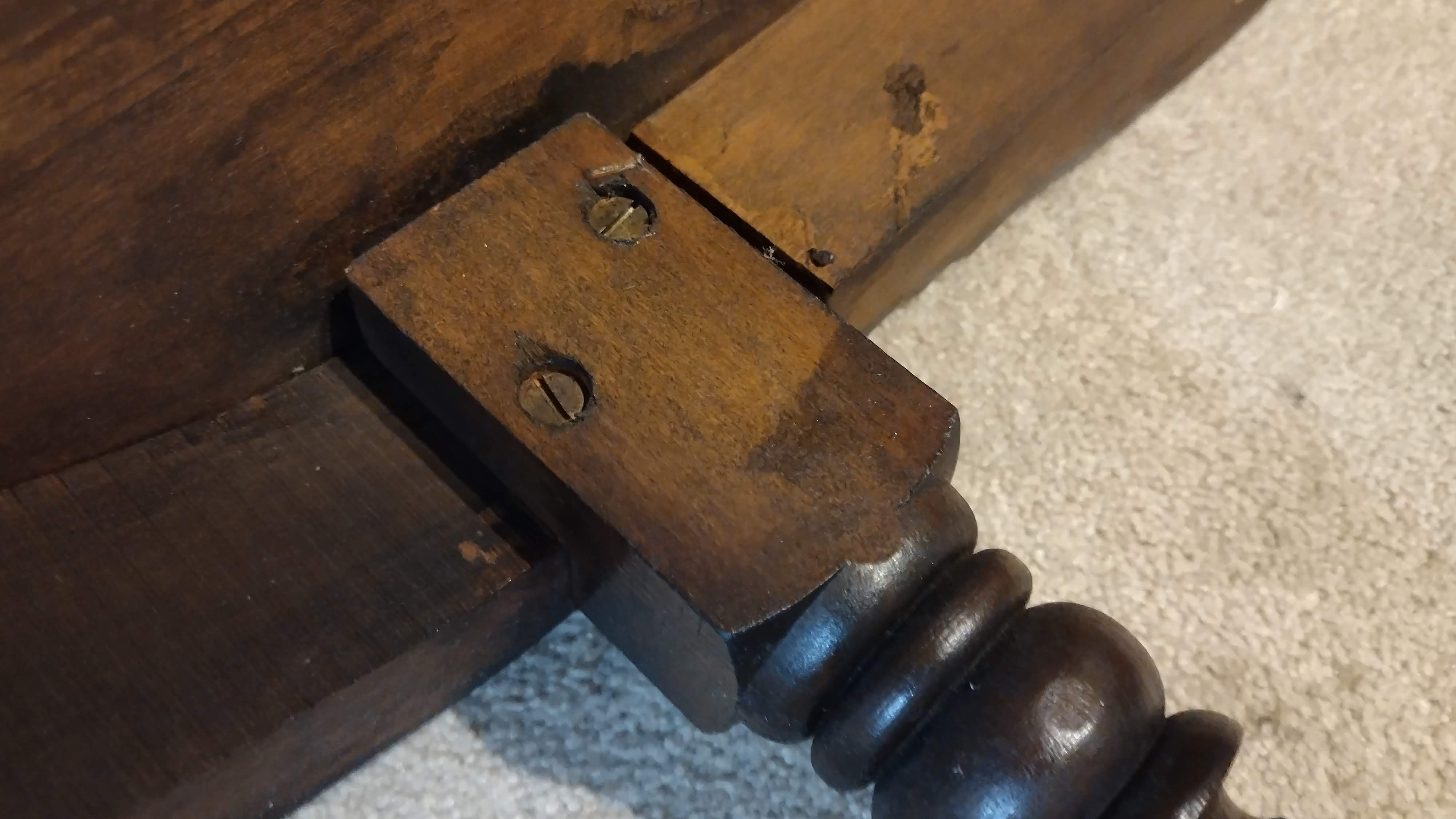
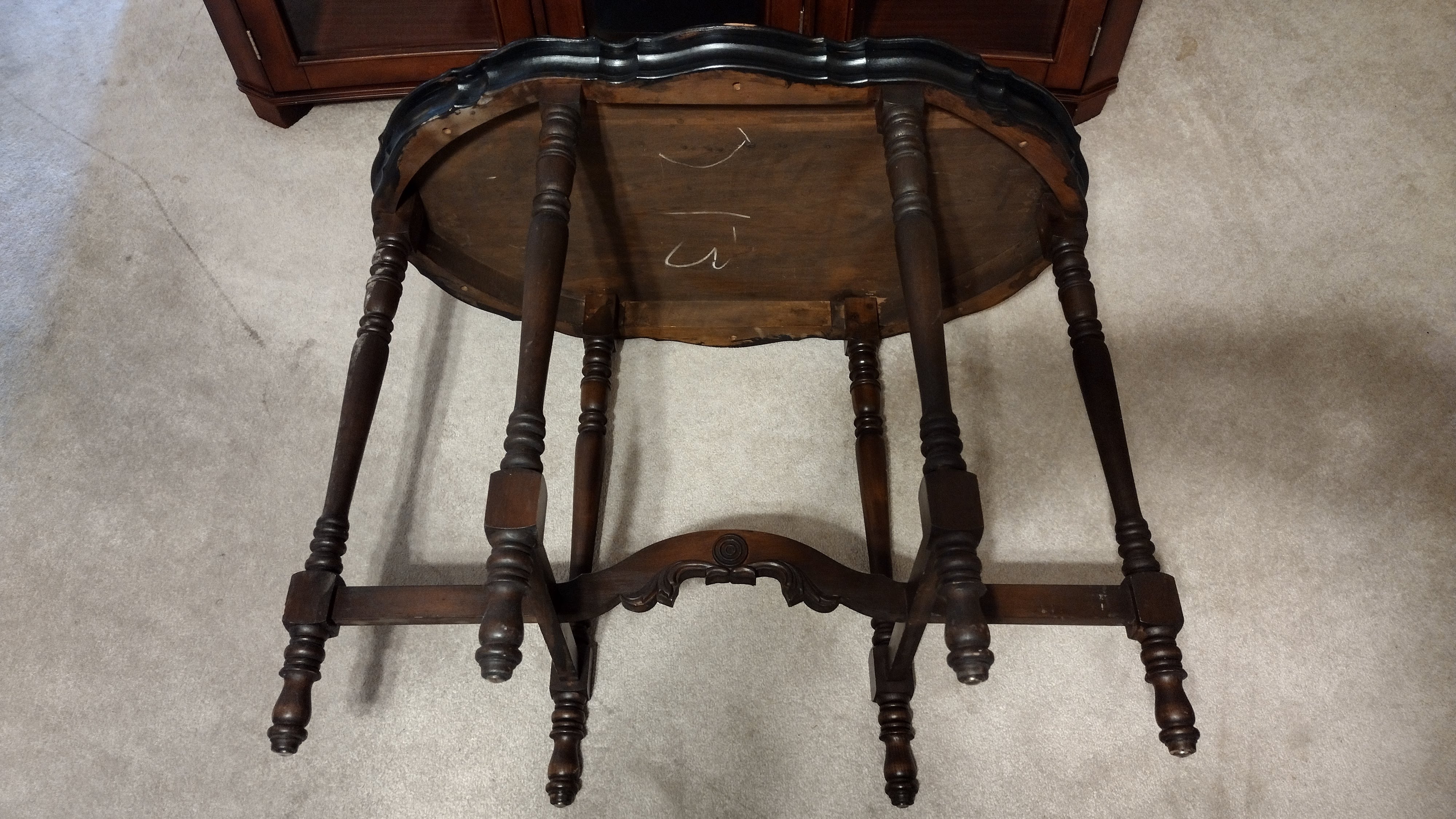
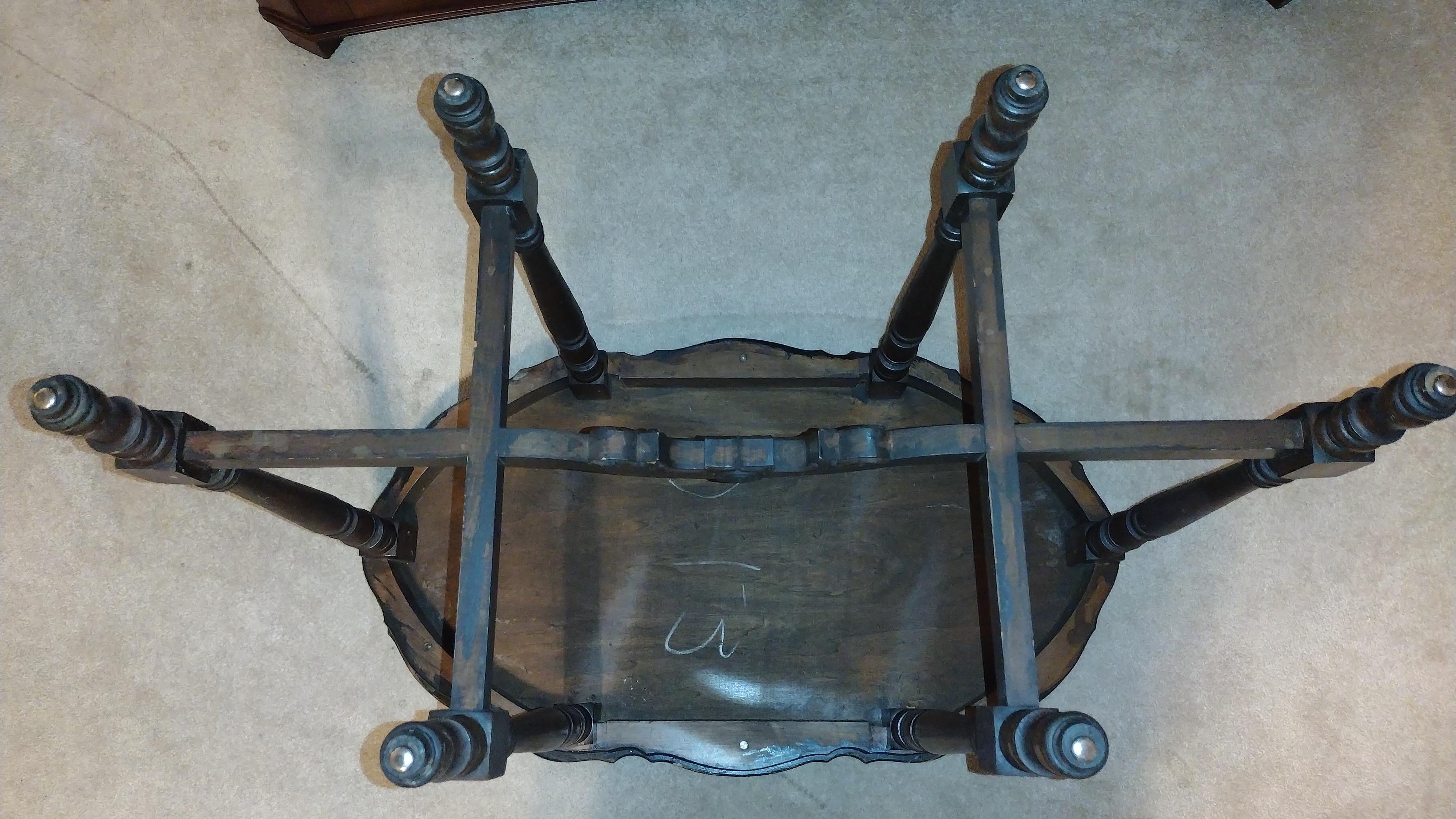
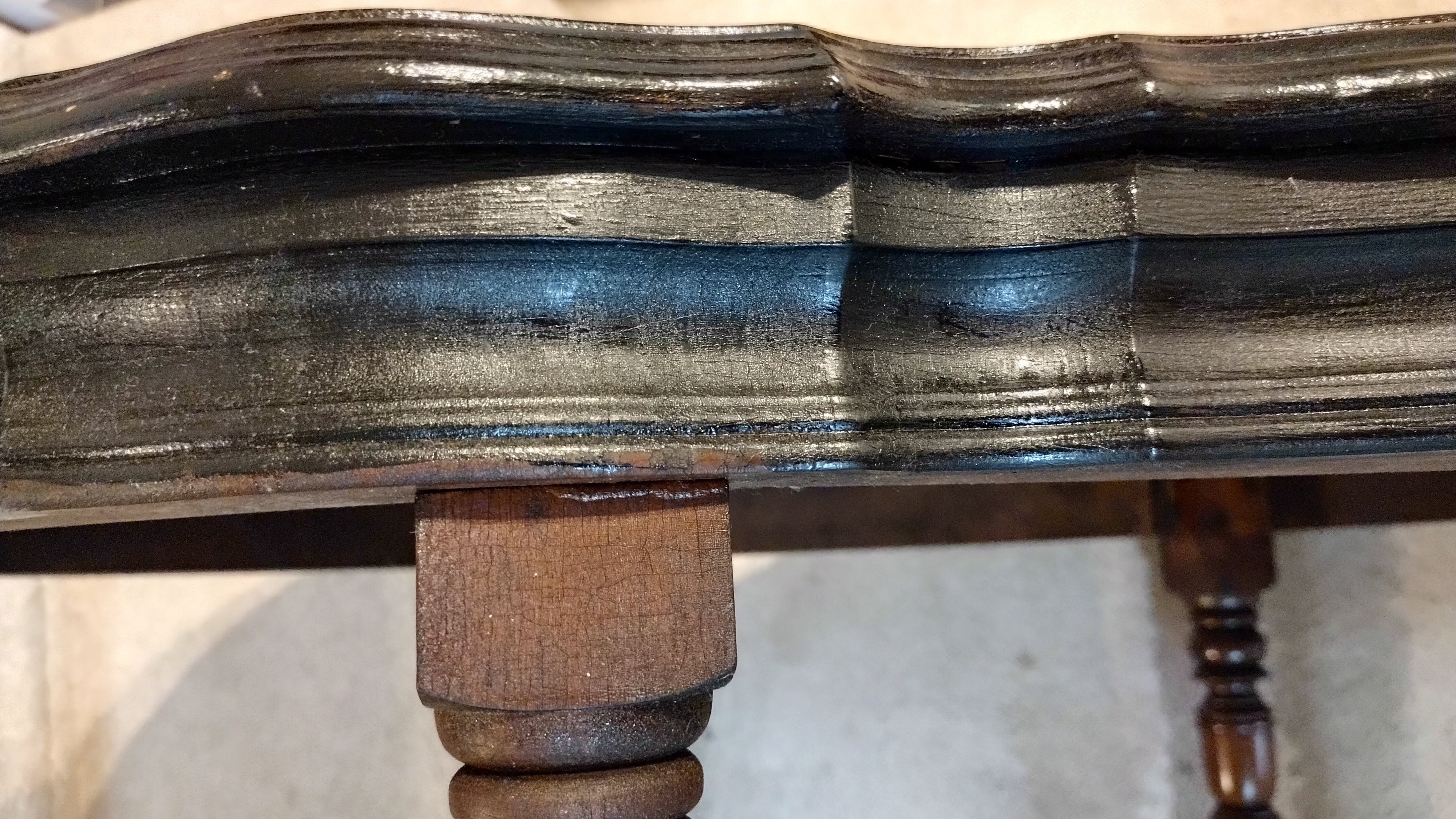
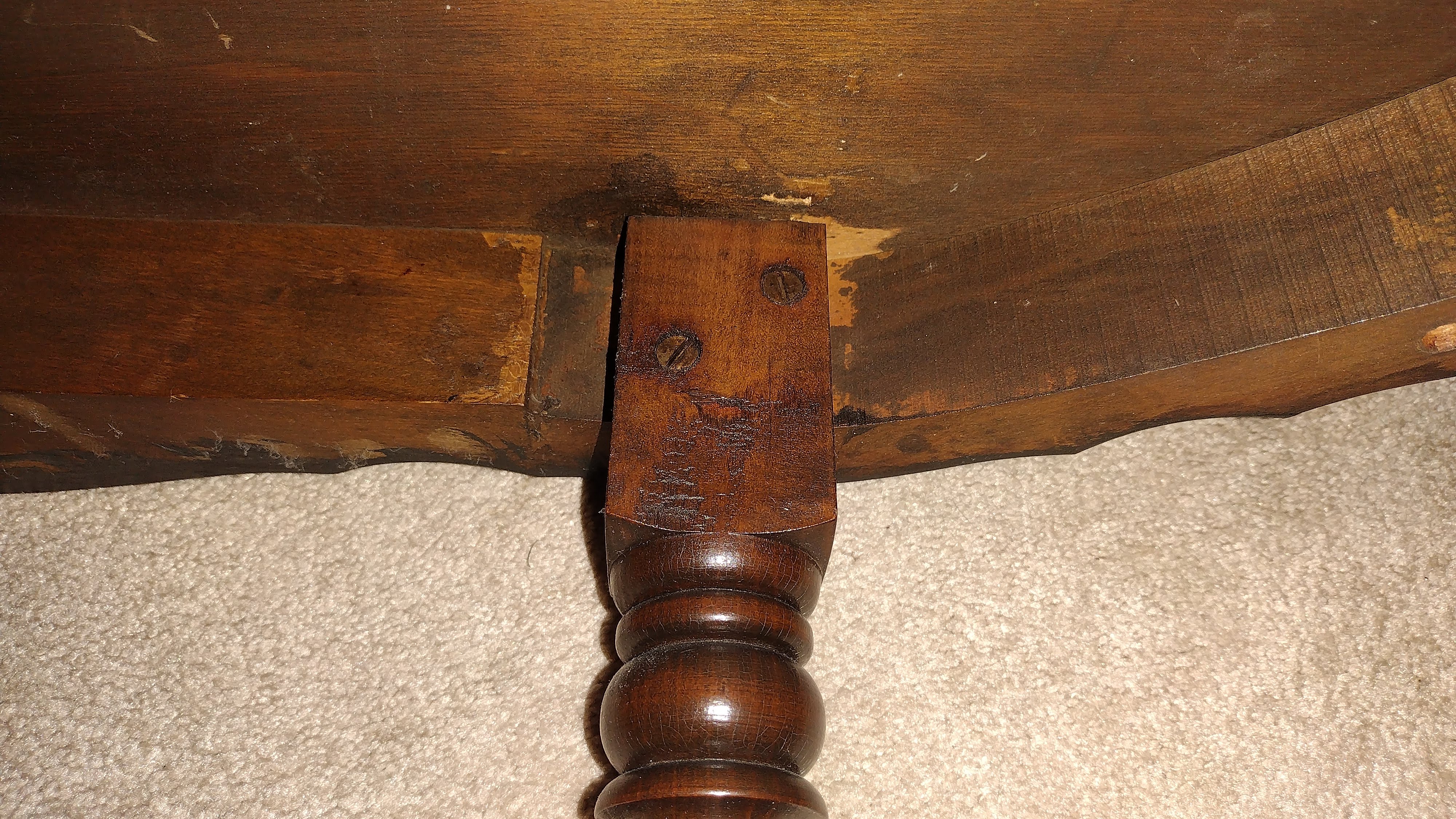
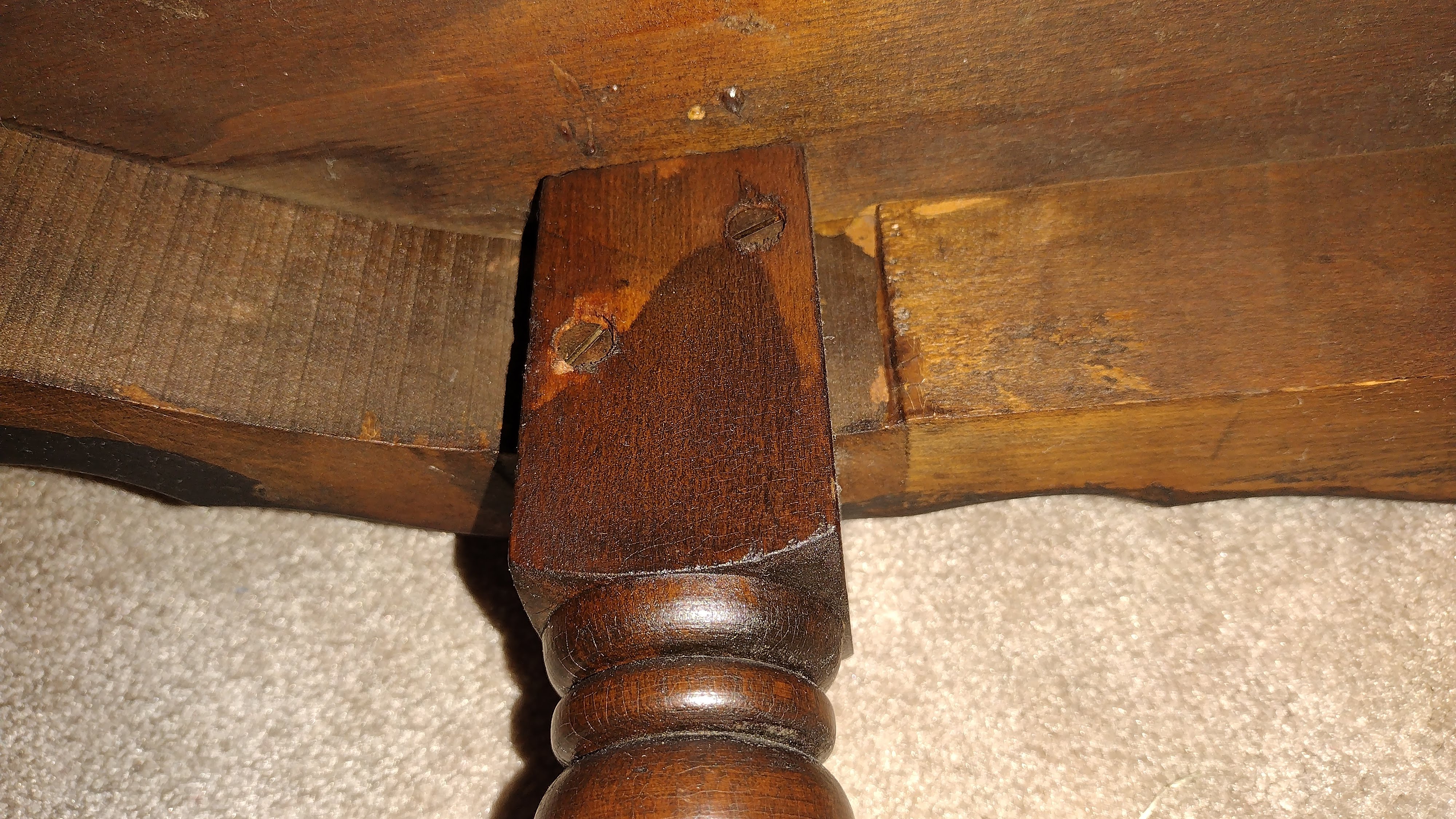
The legs are socketed directly into the thick wood framing beneath the scalloped rim, which points toward factory production from 1885 to the 1915s.
The absence of metal corner braces and the consistent use of the flat-head screws across all leg joints further confirms that this table is a late-19th to early-20th-century piece (circa 1885–1915) rather than a later mid-century reproduction.
Here is what these details tell us about your table's origin:
• Pure Wood-to-Wood Joinery: Relying entirely on interlocking wood parts, pocket slots, and screws—without mass-produced metal corner plates—was the standard for high-quality factory production during the late Victorian and Eastlake eras.
This piece is a Traditional / Revival-style occasional table (often called a parlor table, tea table, or accent table). Key stylistic features include:
• Colonial Revival / Jacobean Revival Influence: The combination of turned, spindle-style legs connected by lower cross-stretchers with an arched central brace draws heavily from 17th- and 18th-century English and early American furniture designs.
• Serpentine / Scalloped Top: The contoured, molded edge of the table top adds a decorative, Victorian or Queen Anne flourish to an otherwise structured, geometric base.
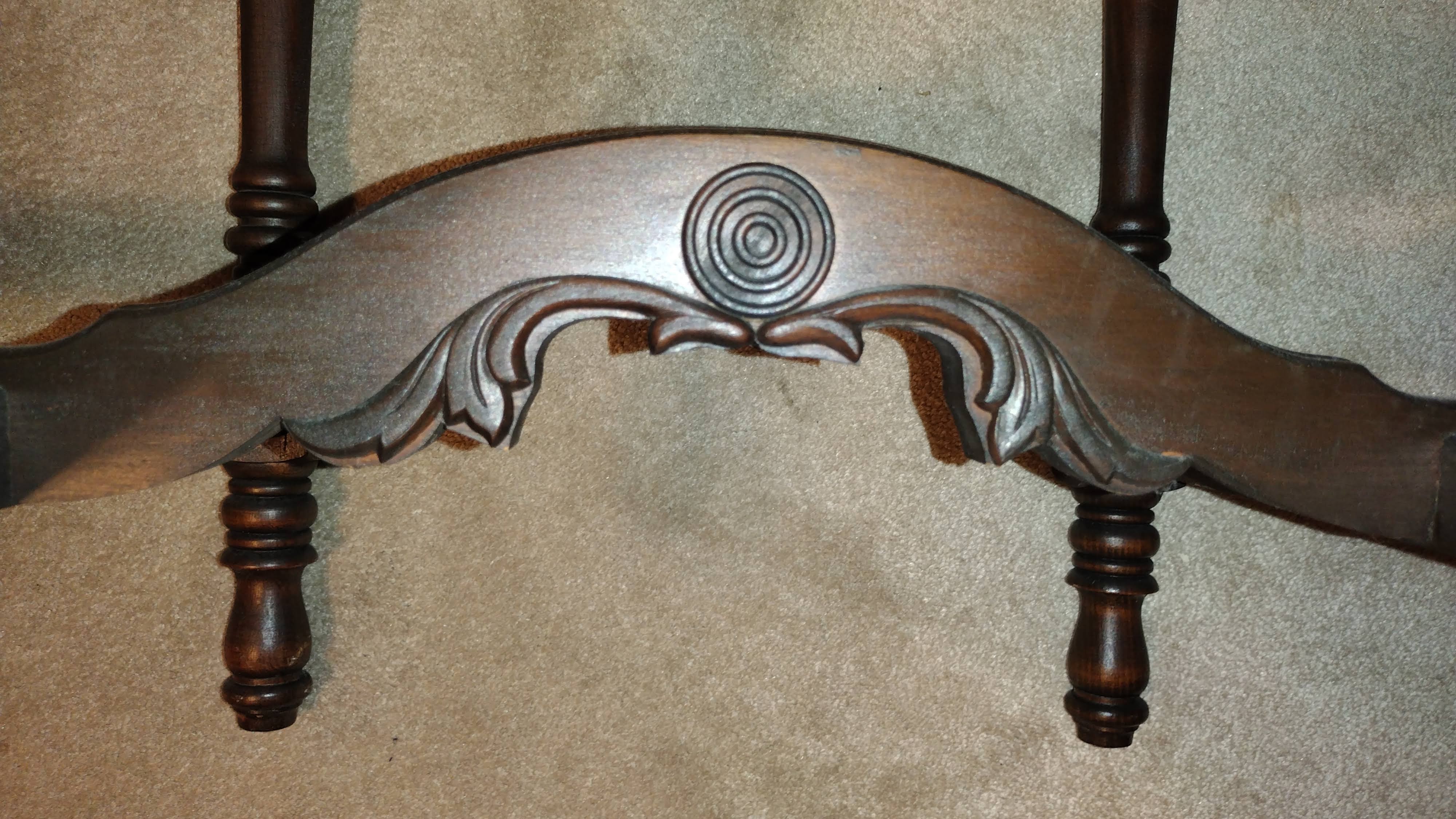
The Multi-Leg Serpentine Stretcher (Late Victorian / Renaissance Revival)
• The Style: The curved, shaped wooden framework connecting the legs at the bottom is an openwork stretcher system. In the mid-to-late 19th century, American and European furniture makers moved away from simple, straight four-legged bases toward highly stylized, multi-legged configurations (this table features an oval top with six distinct leg points).
• The Window: This complex, fluid stretcher system with central decorative elements (like the carved finial block visible in the center) was a hallmark of the Renaissance Revival (1860s–1880s) and the subsequent late-Victorian Aesthetic Movement (1880s–1900).
Location is near the Walmart at 14595 US231 Hazel Green, Al 35750